How to Safely Clear Overgrown Fence Lines Before Removal
Got an overgrown fence line with saplings, debris, slopes, and poison ivy? Learn how to clear it safely and prep for future fence removal.
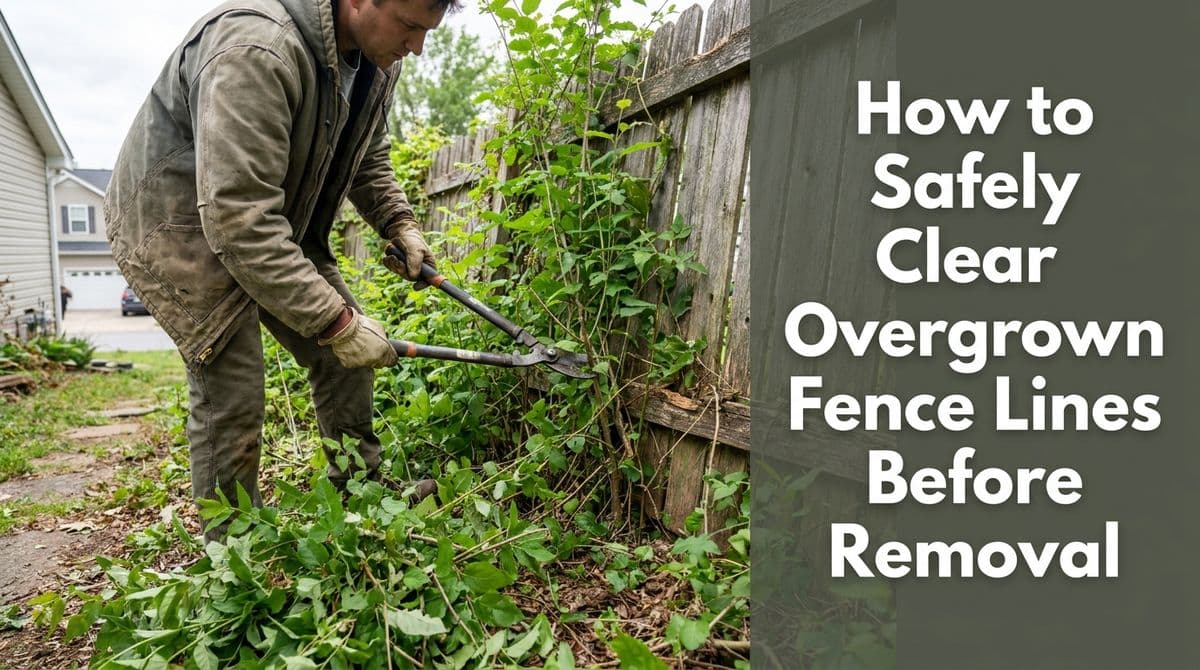
Clearing an Overgrown Fence Line Safely
We recently got a call from a homeowner – let’s call him Mark – who was staring down a long, deteriorated fence at the back of his yard. The whole fence line was choked with years of sticks, leaves, saplings, and vines. He’d started to tackle it himself, caught a case of poison ivy, and decided it was time to talk to a professional.
Mark’s fence ran almost the full width of his property, with a few feet of overgrowth on his side and even more on the back side (which wasn’t his property). The ground sloped away from the yard, and he eventually wanted to remove the fence altogether. His big question: “How do I safely clear this mess without tearing up my yard, sliding down the hill, or getting poison ivy again?”
Here’s how we walked him through the process – and the same steps you can use to plan your own fence-line cleanup safely.
Step 1: Walk the Fence Line and Know Your Boundaries
Before we ever fire up equipment, we do what we did with Mark: ask about length, depth, and slope, then walk the fence line.
On your own property, start with a simple assessment:
- Length: How many feet of fence are we talking about? A rough estimate is fine.
- Depth of overgrowth: Is the brush 2–3 feet deep, or more like 6–8 feet?
- Slope: Does the ground fall away gently, or does it feel steep underfoot?
- Property lines: Mark was right to ask about the back side of his fence. You generally cannot clear on the neighbor’s side without permission.
Use this walk-through to note hazards – old wire, broken fence posts, hidden rocks, or standing water – and to decide whether the project is realistic as a DIY or better left to a crew.
Step 2: Gear Up for Safety (Especially for Poison Ivy)
Mark had already learned the hard way that poison ivy was hiding in the mix. Any time we suspect it, we treat the job differently.
For a safer fence-line cleanup, suit up with:
- Gloves: Nitrile or rubber under heavier work gloves to keep sap and oils off your skin.
- Clothing: Long sleeves, long pants, and socks that overlap your pants.
- Eye and respiratory protection: Safety glasses and at least a dust mask if you’ll be cutting or raking dry debris.
- Wash plan: Have a plan to immediately wash exposed skin, tools, and clothes after working around poison ivy.
One important rule we explained to Mark: never burn brush that may contain poison ivy. The smoke can carry the oils and cause serious reactions.
Step 3: Clear Loose Debris First
Mark’s fence had years of built-up sticks and leaves piled along the bottom. We always start there before cutting anything larger.
On your own fence line:
- Rake and pile: Use a sturdy leaf or garden rake to pull loose material away from the fence so you can see what you’re working with.
- Sort as you go: Make separate piles for leaves/small debris and for larger branches.
- Watch your footing: On slopes, work across the hill in short sections instead of straight up and down.
This step alone can make the area look dramatically better and lets you safely spot saplings, old wire, or rotten posts.
Step 4: Tackle Saplings and Vines Without Damaging the Yard
Once the debris was out of the way at Mark’s property, the real culprits showed up: saplings, woody shrubs, and vines woven into the fence.
Here’s how we typically handle them:
- Small saplings (finger to thumb size): Loppers or a hand saw work well. Cut them as low to the ground as possible.
- Larger saplings: A chainsaw can be used carefully, but only on stable, level footing. On slopes, we often use smaller saws to stay sure-footed.
- Vines on the fence: Cut them in sections and gently pull them away so you don’t twist or yank on already weak fence posts.
If you plan to remove the fence later, like Mark, staying close to ground level with your cuts will make pulling posts and rails much easier down the road.
Step 5: Work Smart on Slopes and Soft Ground
Mark’s yard sloped away from the fence, similar to some stormwater basins we maintain for local HOAs. Slopes change how we approach a job.
For sloped fence lines:
- Check the weather: Wet ground and machinery on slopes don’t mix. We often reschedule if heavy rain is in the forecast.
- Limit machines: On milder slopes (under about 30–45 degrees), lightweight equipment and hand tools are usually safer than heavy machines.
- Keep escape paths: Always work so you have a clear step back or sideways if something shifts or rolls.
If the slope feels like it wants to pull you downhill, or if you can’t get solid footing, that’s a sign to bring in a crew with the right gear.
Step 6: Plan Disposal and Future Fence Removal
Mark’s ultimate goal was to take the fence out completely once the brush was gone. We walked him through how cleanup and removal should fit together.
Think about:
- Disposal: Will you bag leaves, stack brush by the curb, chip on site, or haul everything away?
- Stumps and roots: Cutting saplings low and treating stumps (where allowed) reduces regrowth before you pull the old fence.
- Access: If a contractor will remove the fence later, keeping a clear path along the fence line now will save time and cost then.
For many homeowners, especially with long fence runs like Mark’s, hiring a crew for a focused 1–2 day cleanup makes the later fence replacement or removal much smoother.
When to Call in a Professional
There’s plenty you can do yourself, but you may want professional help if:
- The fence line runs hundreds of feet and is heavily overgrown.
- The ground is sloped, uneven, or holds water.
- You know (or suspect) poison ivy or other irritants are present.
- You plan to remove or replace the fence soon and want it prepped properly.
With Mark, we set up a quick site visit, confirmed the conditions, and gave him a clear, time-based estimate so he could decide what fit his budget and timeline.
If you’re staring at an overgrown fence line and not sure where to start, we’re always happy to walk it with you, talk through options, and help you clear it safely so the fence removal or replacement is the easy part.