Forestry Mulching 101: Clearing Safe, Usable Pond Edges
Learn how forestry mulching can safely clear overgrown land around your pond, prevent erosion, and create usable space where your family can walk, play, and fish.
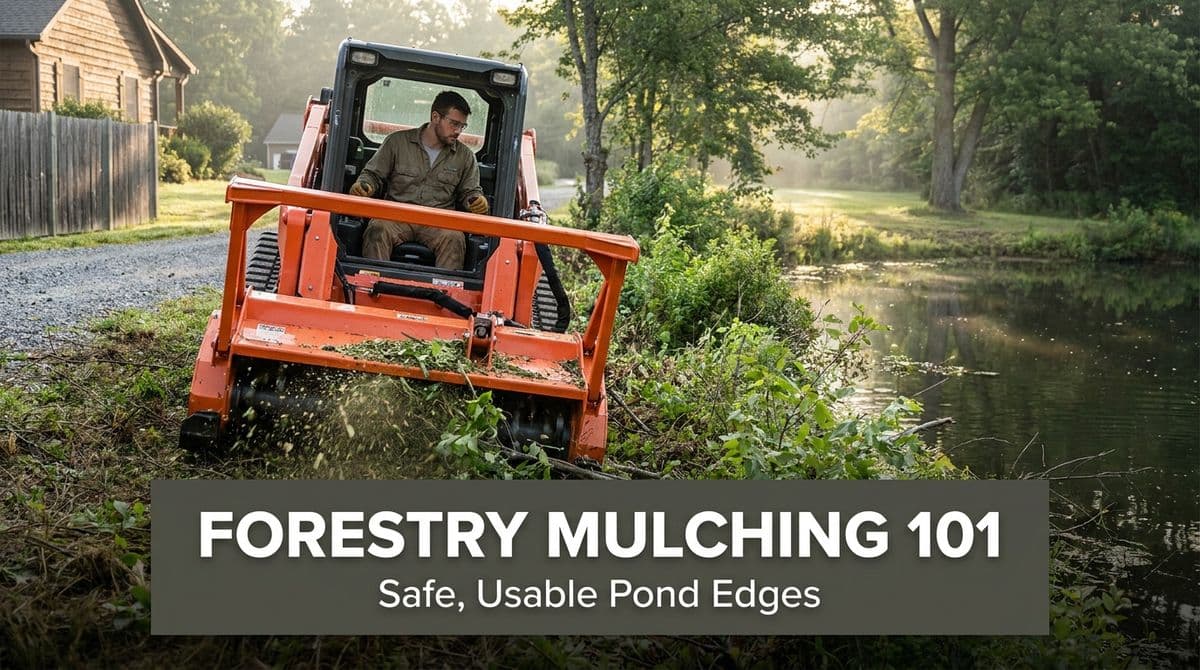
Clearing Overgrown Land Around a Pond: A Real-Life Example
We recently got a call from a homeowner — let’s call him Brian — who had an overgrown lot next to his home with a small pond at the back. He wasn’t planning to build on it; he just wanted his kids to be able to walk back there safely and fish without fighting through briars and saplings.
Brian had seen our forestry mulching service online and was curious if it would be a good fit for his one-acre lot. He also wanted to know what it might cost, how long it would take, and whether it was safe to clear near the pond edge.
That conversation is a great example of the questions we hear all the time, so we thought we’d walk you through how we look at projects like Brian’s and what you should know if you’re thinking about forestry mulching around a pond on your own property.
What Is Forestry Mulching, and Why Use It Near a Pond?
Forestry mulching is a land-clearing method where we use a powerful machine with a mulching head to cut, grind, and shred brush, small trees, and undergrowth right where they stand. Instead of pushing everything into burn piles or hauling it off, the material is turned into a layer of mulch on the ground.
For a pond area, that has some big advantages:
- Less soil disturbance: We’re not ripping up roots with a dozer, so the soil stays more stable around the water.
- Built-in erosion control: The mulch layer helps hold soil in place and slows down runoff headed to the pond.
- Cleaner finished look: You end up with a park-like feel instead of ruts, stumps, and big debris piles.
That’s exactly what Brian wanted: usable, walkable space for his family without tearing up the property or risking damage to the pond.
How Much Can We Clear in a Day? (And What It Costs)
One of Brian’s first questions was, “It’s about an acre — what kind of price range am I looking at?” We walked him through the same basic framework we use for everyone:
- We charge by the hour for our forestry mulching machine and operator.
- There’s a six-hour minimum (about enough time for many lighter-density acre lots).
- On an average property, we typically clear around an acre in a full day, depending on conditions.
On jobs where the undergrowth is light and there are just a few trees sprinkled in, we can sometimes finish close to an acre within that minimum time. On thicker, more tangled properties with larger trees to remove, it can take closer to a full day or more.
That’s why we always recommend a quick on-site walk before giving a firm estimate. Until we see how dense the brush is, what size the trees are, and whether there are obstacles we’ll need to tiptoe around, any price we give would just be a guess.
Why a Site Walk Matters So Much
With Brian, we set up an evening site walk so we could see the lot next to his home and walk together down to the pond edge. During that visit, we look for things like:
- Density of undergrowth: Is it mostly tall grass and saplings, or a jungle of thick brush and vines?
- Tree size and type: Are we talking small pines and volunteer hardwoods, or larger trees that slow production?
- Hidden obstacles: Old fence lines, rocks, trash piles, or stumps that can’t be seen from the road.
- Access to the pond: Where can we safely run the machine without getting too close to soft banks?
Once we see it in person, we can usually give you a clear estimate on the spot and explain what we can reasonably accomplish in six hours versus a full day. For many families like Brian’s, that clarity makes it easier to decide how much of the lot to tackle right now and what can wait.
Staying Safe When Clearing Around a Pond
Ponds are wonderful, but they do add a few safety considerations when we’re doing forestry mulching. Here are some key things we always keep in mind — and that you should, too, if you’re planning any work around your pond:
1. Protecting the Pond Banks
We avoid running heavy equipment right on the edge of the water. Pond banks can be soft and unstable, especially after rain. Instead, we:
- Maintain a safe buffer zone where we don’t take machinery.
- Mulch from the “high and dry” side and leave a light root structure at the very edge to hold soil.
- Watch out for any signs of erosion and adjust how close we work.
2. Preserving Water Quality
Because everything we mulch turns into ground cover, we’re actually helping reduce sediment washing into the pond compared to traditional clearing. To keep water quality in mind, we:
- Avoid pushing dirt or debris directly into the pond.
- Leave some vegetation along steeper slopes as a natural filter strip.
- Pay attention to drainage patterns so new bare spots don’t send muddy water straight to the shoreline.
3. Creating Safe, Usable Family Space
For families like Brian’s, the end goal is simple: a safe, inviting area where kids can walk down, cast a line, and enjoy being outside. To help with that, we typically:
- Open up at least one clear, gently sloped path from the yard to the pond.
- Mulch low enough that you’re not tripping over stubs or hidden roots.
- Keep good sight lines from the house so you can easily see kids near the water.
How to Get Your Own Pond Area Ready for Forestry Mulching
If you’re thinking about clearing around a pond on your property, here are a few simple steps we suggest before we ever show up with equipment:
- Walk the area carefully: Note any wet or soft spots, old trash piles, or hazards like wire, posts, or concrete.
- Mark what you want to keep: Flag trees or bushes you love so we know to work around them.
- Think about access: Decide where you want your main walking path to the pond and any fishing spots.
- Consider future plans: Fire pit, benches, a small dock — share those ideas so we can clear with your long-term vision in mind.
By the time we meet you on-site, you’ll already have a good sense of your priorities, and we can help you shape them into a practical, phased plan that fits your budget.
Turning an Overgrown Lot into a Family Gathering Place
When Brian first called, that pond lot was basically wasted space — thick brush, limited access, and not somewhere he felt comfortable sending the kids. With the right forestry mulching approach, properties like his can turn into some of the most enjoyable parts of the home.
If you’ve got an overgrown area around a pond and you’re not sure where to start, we’re happy to walk it with you, talk through options, and give you a straightforward estimate. With a little planning and the right equipment, you can turn that thicket into a clean, usable space your family will enjoy for years.