Backyard Clean-Ups for Aging & Mobility-Limited Owners
Aging or mobility issues making your backyard unmanageable? Learn safe, practical ways to clear brush, retire old garden beds, and reclaim your yard with help.
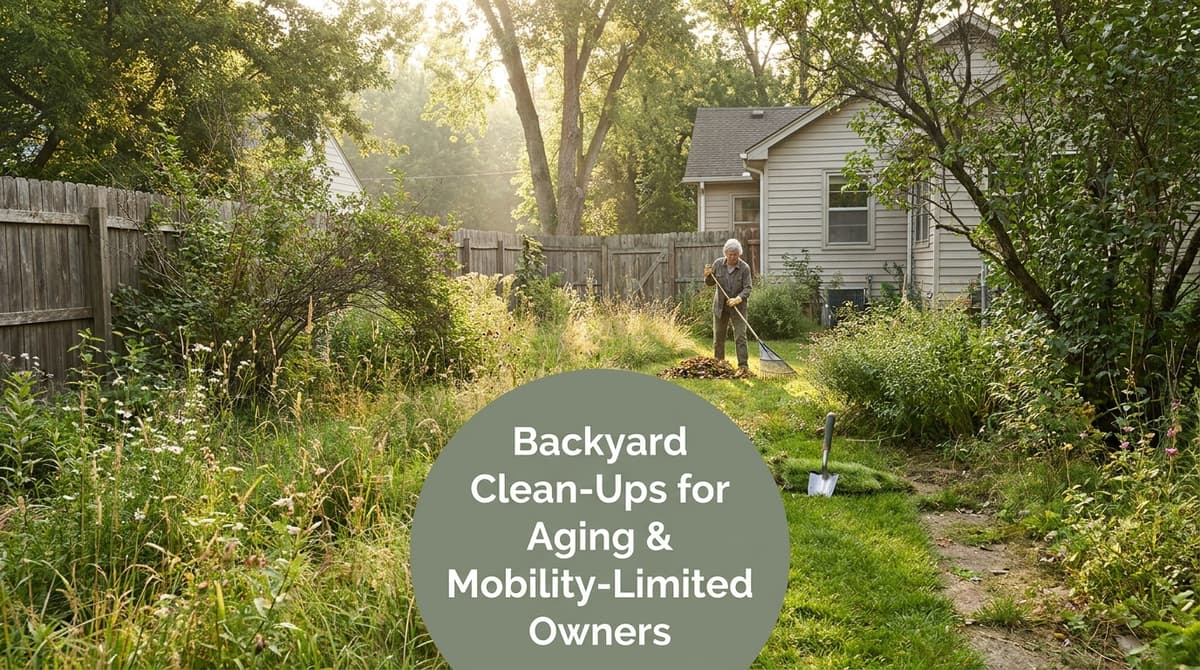
“I Just Can’t Keep Up Anymore” – A Backyard Story We Hear A Lot
We recently got a call from a customer — let's call her Diane — who had a problem we see more and more these days.
Diane is a cancer survivor and told us she’s been left with some leg and vascular issues. She can still get on her riding mower, but anything beyond that — hauling brush, trimming trees, wrestling with weeds — is simply off the table now.
In the very back of her property, she had a giant brush pile that had been sitting for six years. On top of that pile? Old pressure-treated lumber from raised garden beds a hauler had torn apart years ago. Two apple trees needed to come down, her vegetable garden had given up this year, and the once-loved garden area had turned into a wild, overgrown space she couldn’t safely manage anymore.
What Diane really wanted was simple: “I just need my backyard back to where it’s manageable for me.” That’s the heart of what a lot of aging or mobility-limited homeowners ask us for.
Step One: Get a Clear, Safe Plan (Without Overdoing It)
On the phone with Diane, we walked through our process, and it’s the same approach we recommend for anyone in a similar spot:
- Start with pictures. We asked Diane if she could take photos of the brush pile and old garden area — or have someone help her. Photos let us see how big the pile is, what’s mixed in, and what equipment we’ll need, without her having to walk the whole yard herself.
- Talk honestly about your limits. Diane was very clear about what she could still do (mowing on the rider) and what she could not. That helps us tailor the cleanup so that the end result fits her abilities, not a 25-year-old landscaper’s.
- Discuss budget and options. We explained our hourly and daily rates upfront so there were no surprises. From there, we could break the work into phases if needed — for example, “brush pile and tree removal first, garden leveling later.”
If you’re calling a pro, don’t be shy about any of this. A good company should listen, ask questions, and help you prioritize what to tackle first so you stay safe and on budget.
Dealing With Old Brush Piles and Mixed Debris Safely
Diane’s brush pile was tricky because it wasn’t just sticks and limbs. There were 2x4s and 4x10s from pressure-treated raised beds lying on top, buried in weeds and pokeweed. That changes how we handle it.
Here’s how we approach piles like that — and what you should think about in your own yard:
- Separate what can be mulched from what can’t. We told Diane we could likely use our equipment to quickly pull the lumber out of the pile. Clean brush can usually be chipped on site, which saves on hauling costs and gives you mulch. But pressure-treated wood should never be chipped into mulch. It needs to be disposed of properly.
- Watch for hidden hazards. Old piles can hide critters, nails, wires, buried boards, and even volunteer tree saplings. We asked Diane about any large logs or stumps, because those can require different machines.
- Skip the heavy lifting yourself. For aging or mobility-limited homeowners, climbing over an old brush pile is a recipe for falls. This is the part of the yard where we’d much rather you stay off and let someone with the right gear and insurance handle it.
If your pile has been sitting for years, assume it’s more complicated than it looks. Take photos from a distance, don’t climb on it, and share details with whoever you’re hiring.
Letting Go of Old Garden Beds and Overgrown Areas
Diane also had several raised garden beds she wanted to donate, then have the area graded flat so she could simply mow across it. This is a very common transition: moving from intensive gardening to easy, low-maintenance space.
When we reclaim an old garden area, we usually look at:
- What can be reused or donated. Just like Diane wanted to give away her 4x8 raised beds, you may have usable lumber, pots, or even plants that neighbors or local gardeners would gladly take.
- How smooth and “mower-friendly” the end result will be. Our goal is often to turn a lumpy, weedy plot into something you can safely cross with a mower without ruts, stumps, or surprise holes.
- Future access. We think about how you’ll use the space going forward: paths wide enough for a mower, clear turning areas, and no tight corners that require heavy trimming.
If full vegetable gardening is no longer realistic, it’s okay to scale back. You might keep one small raised bed near the house and convert the rest to lawn, groundcover, or simple mulch.
Safety Tips for Aging or Mobility-Limited Homeowners
We always keep safety front and center when working with homeowners like Diane. Whether you’re hiring us or another company, here are practical guidelines:
- Limit how far you walk. Use a riding mower or mobility aid to get close to the area if you need to take photos, but don’t feel like you must walk the whole perimeter.
- Stay off unstable ground. Avoid slopes, soft ground, or thick weeds where you can’t see your feet. One hidden hole or root can cause a serious fall.
- Have a “no-climb” rule. No climbing over brush piles, no stepping on old lumber, and no ladder work for trimming trees. That’s exactly what a professional crew is there for.
- Ask about insurance. We explained to Diane that we carry workers’ comp and general liability. Whoever you hire should be able to say the same, so you’re protected if something goes wrong.
How to Work With a Pro to Reclaim Your Yard
By the end of our call, we’d set a plan: Diane would send us photos, we’d swing by to see the backyard in person, and she’d have a written estimate the same day. That in-person visit lets us say, “Here’s what we can do in a day, here’s what it will cost, and here’s how we can make it manageable for you.”
If your backyard has gotten away from you because of age, health, or mobility issues, you’re not alone — and it’s nothing to be embarrassed about. With the right plan and some professional help, you really can reclaim that space, even if your role going forward is just enjoying the view and driving the mower.
And if you’re looking at your own overgrown brush pile or old garden beds and wondering where to start, we’re always happy to be that “second set of eyes” to help you see what’s possible.